
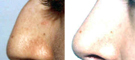





















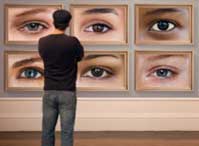

 For years, ideal beauty was based on caucasian facial proportions. Needless to say, many non-caucasian patients seek to improve the appearance of their noses without erasing their ethnic heritage and identity. It takes skill and sensitivity to achieve a cosmetic result that beautifies the face while respecting and preserving ethnicity. Dr. Yagoda performs many ethnic rhinoplasties (aka nose jobs) in New York City (NYC) and Manhattan.
There are technical challenges for a plastic surgeon to consider when refining an ethnic nose. African-Americans, Asians and Indians for example, often have broader and somewhat flatter noses than Europeans. They also tend to have thicker and more oily skin. Hispanics, Asians, African-Americans, Middle Easterners and Mediterraneans may be predisposed to abnormal scar formation and/or increased pigmentation that can make refining the nasal tip more challenging.
Dr. Yagoda is a facial plastic surgeon in New York City and Manhattan who uses integrated and innovative techniques in ethnic rhinoplasty surgery to reduce scarring and to achieve a more natural and long-lasting result. Ask her about her techniques and view her photos in a comprehensive consultation.
- African American/black rhinoplasty
- Asian rhinoplasty
- Indian rhinoplasty
- Latino/Hispanic rhinoplasty
- Mediterranean/Middle Eastern rhinoplasty
About Rhinoplasty
Rhinoplasty (“nose job”) is a cosmetic surgical procedure that improves the appearance of the outside of the nose. It can remove a bump, refine the tip, raise or lower the bridge, narrow the nostrils, lift a droop, fix a cleft, correct asymmetry, and in general, improve your profile and facial appearance. While some cosmetic improvements can be made with non-surgical rhinoplasty using injectable fillers and implants, only cosmetic plastic surgery can reduce the size of an enlarged nose or make a wide nose narrower. In addition, surgical results are permanent!
During a rhinoplasty procedure, a facial plastic surgeon who is also an otolaryngologist or ENT (a specialist who cares for the ears, nose, and throat) may also correct any structural defects of the nose. For example, Dr. Yagoda can straighten a deviated septum and reduce turbinates to improve airflow, correct sinus disease and relieve sleep apnea to enhance restful sleep. Aesthetic and functional nasal surgery demands not only excellent surgical skills but also impeccable aesthetic judgement. When done correctly by a skilled plastic surgeon, rhinoplasty will result in a nose that not only looks better but works better too!
On the other hand, imperfect rhinoplasty surgery can result not only in undesirable cosmetic changes but also poor nasal and/or sinus function. Dr. Yagoda sees a number of patients who seek revisions of a previous nose job. Revision rhinoplasty can be challenging because the facial plastic surgeon must work with the results of a prior surgery, perhaps done by another cosmetic surgeon, without a “road map” of the prior surgical course. This creates a whole new layer of complication and requires unsurpassed surgical skill and aesthetic sensibility. This is the one cosmetic surgery where the art of medicine is far more important that its science. Dr. Yagoda is regarded as the facial plastic surgon other New York City doctors choose when they want the very best. If you’re dissatisfied with a previous rhinoplasty, you’ll want to put yourself in Dr. Yagoda’s hands… anesthesiologists that work with her have long said, “If you want it done right, she’s the Dr. YA-GO-DA!”
Who Is a Candidate for Rhinoplasty?
Young adults seeking rhinoplasty often ask Dr. Yagoda, “How old do I have to be before I can have this procedure?” From a purely physical standpoint, the answer is, “anytime after puberty.” The nose continues to grow from birth throughout adolescence. After puberty, the nose has reached adult size. Adults can have rhinoplasty, whether it is function or cosmetic surgery, performed at any age to improve their appearance or restore it following an injury.
The Procedure
Rhinoplasty or nose job surgery can be performed in Dr. Yagoda’s New York City office-based surgical facility or in a NYC hospital, under local anesthetic with IV sedation or under general anesthesia. This plastic surgery procedure takes between 45 minutes and two hours. The exact surgical technique is uniquely tailored by the plastic surgeon for each patient but most of the time, the incisions are made internally and there are no visible scars. In rare instances, an incision is made at the base of the nostrils and carefully hidden.
Recovery
You can return to work in about a week after your plastic surgery and you’ll be able to use a stationary bike or treadmill by the second week. By the third week, you can return to full activities. Although you’ll see immediate improvement, your nose’s shape and your profile will continue to refine over the next 12 to 18 months. Read about Dr. Yagoda’s Integrative Post Operative Care Program
Risks
Like all surgery, rhinoplasty has risks including those of infection, bleeding, and reaction to anesthesia. Other risks specific to a nose job include nasal structural damage. Dr. Yagoda will discuss these potential risks as well as the benefits of rhinoplasty in full during your consultation.
Flying In
Dr. Yagoda’s patients come from all over the world. From Qatar to Quebec, we can help you get here from abroad.